
How a San Diego or LA home services shop can use AI to write service reports customers actually read
A repeatable template plus one AI subscription turns scribbled technician notes into a plain-English report that explains what was done and why it cost what it cost.

- A good customer report has five parts: what was wrong, what was done, what parts were used, what it costs, and what to watch next.
- The same report template works for every job, from a tune-up to a full replacement.
- One AI subscription such as ChatGPT or Claude is the only tool needed to draft the report from technician notes.
- A person checks every draft before it goes out, which is what keeps the report honest.
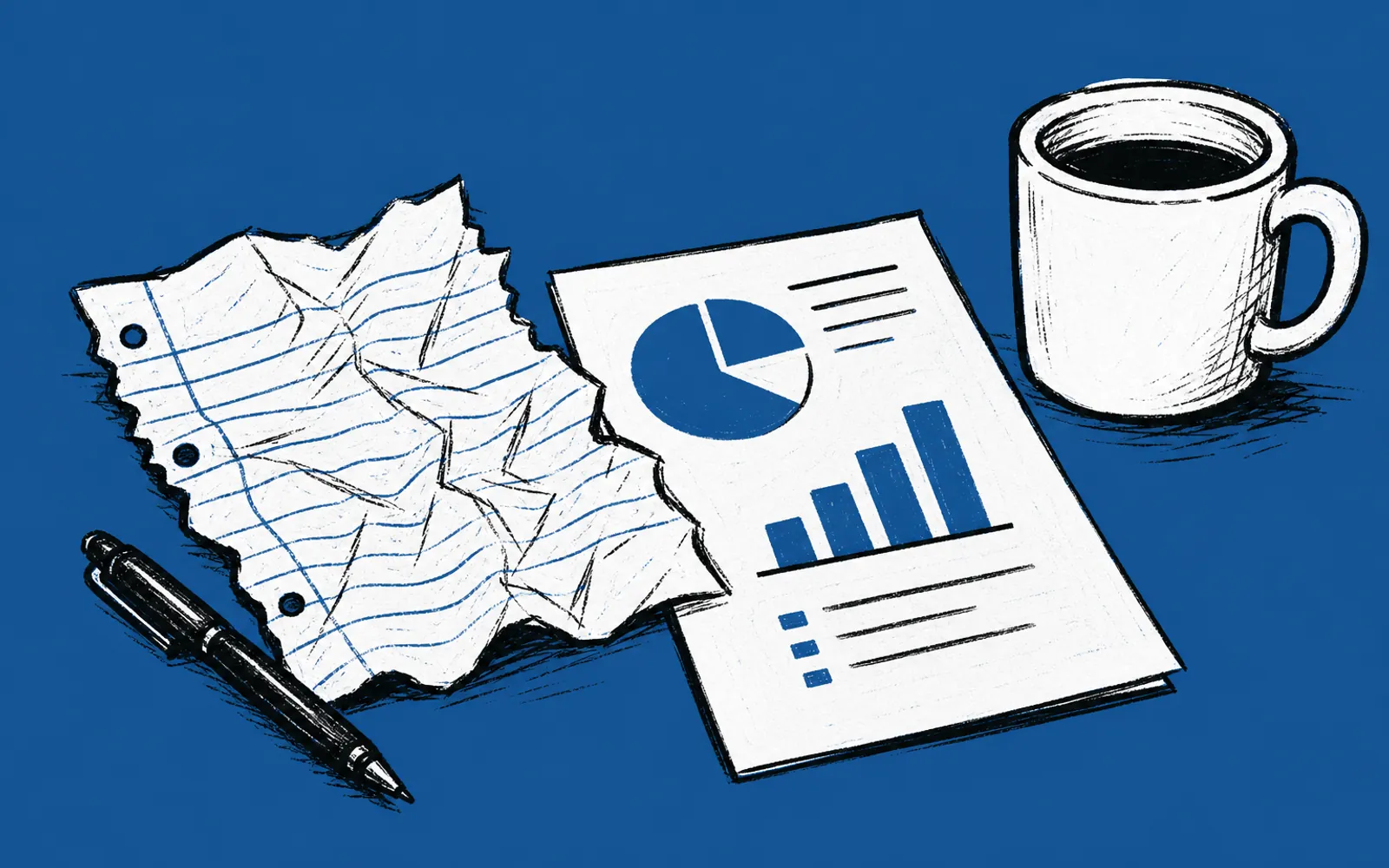
The job is done. The HVAC system is running, the leak is stopped, and the technician hands over a scrap of paper with shorthand nobody outside the trade can read. Now the owner spends twenty minutes on the phone explaining what happened and why the invoice says what it says, while the customer's attention fades somewhere around the second sentence. This is the moment every home services shop in San Diego or Los Angeles knows. The work was good. The explanation is where it falls apart.
AI can close that gap. Given the technician's raw notes and a fixed template, a tool like ChatGPT or Claude can draft a clear, plain-English service report in under a minute. The shop keeps the template, the technician keeps writing short notes, and the customer gets a document they actually read.
The size of the room
This is a big, concrete market. San Diego County alone counts about 3.3 million residents and roughly 1.29 million housing units, and just over half of those units are owner-occupied, according to Census Bureau estimates. Every one of those owner-occupied homes is a furnace, a water heater, a roof, a yard. Each visit can end in a report, and most of them currently end in a phone call instead.
What belongs in a customer-facing report
The report is not a technical file and it is not an internal record. It is an explanation written for a homeowner who does not know what a capacitor is. Five things belong in it. First, what the customer asked for or what went wrong, in their words. Second, what the technician found when they looked. Third, what was done, step by step, with trade names spelled out and explained. Fourth, what parts and labor cost, matching the invoice line for line. Fifth, what to watch for next: signs of a problem, when the next maintenance visit should happen, and anything the customer can safely do themselves.
Plenty stays out. Leave out photos of the customer's home interior. Leave out other clients' names or addresses. Leave out internal pricing notes, wholesale costs, and anything about other jobs that day. Leave out jargon that has no plain-English translation, and skip the upsell pitch. If a recommendation belongs in the report, it gets its own short section with a reason, not a scare line.
Who this works for, and who it does not
This works for owner-led HVAC, plumbing, electrical, landscaping and similar shops where one or two people write the customer notes and the volume is real but not enormous. It works when the owner wants customers to understand the invoice, renew maintenance agreements, and call back next season. It is not for a shop that needs a full field-service platform with dispatch, routing and parts inventory built in. If the notes are already clean and the reports already go out fast, the AI step may not earn its keep. And if a shop has no consistent template, the drafting will drift job to job no matter what tool is used.
How to start using it
- 01Write the template once
Build a one-page template with the five sections: what was wrong, what we found, what we did, what it cost, and what to watch next.
- 02Set the ground rules
Add a line to the template that the draft must use only facts from the notes and ask when something is missing, never fill a gap on its own.
- 03Paste notes and the template into the AI tool
In ChatGPT or Claude, ask for a plain-English report in the template's structure, written for a homeowner with no trade knowledge.
- 04Read the draft against the notes
Check every claim, number and part name against what the technician actually wrote. Fix anything the tool sharpened or invented.
- 05Check it against the invoice
Confirm every cost in the report matches the invoice line for line before anything is sent.
- 06Send and keep the pair
Send the report with the invoice, and keep the notes with the job record so future visits start with context.
The prompt does not need to be clever. A working version reads: "Using only the facts in these technician notes, write a service report in this template, for a homeowner with no trade knowledge. Plain English. If a detail is missing, write [ASK TECH] instead of guessing." Save that prompt in the shop's own AI account so any admin can run it, not just the owner.
Keeping it honest
The honest version of this workflow has one rule: the technician's notes are the source, and the AI only translates them. A report that says a part was replaced when the notes do not say so is a liability, not a time-saver. The person checking the draft should be someone who knows the job, and the check happens before every send, not on a spot basis. The same discipline applies to recommendations. If the tool suggests a follow-up the technician never mentioned, that line comes out.
Shops doing this well also give technicians a short note structure: what the customer reported, what was found, work performed, parts used, total time, and anything odd. That structure takes the same effort as scribbling, but it gives the AI tool something real to work with.
Where a working session helps
Cali AI Lab offers this kind of setup help directly. An owner can bring their technician note format and their report format to a free 25-minute fit call on Zoom, and the concierge looks at two tasks that repeat in the week and picks a first result worth having. The service reports template is exactly the kind of small setup the concierge team helps build, and the training side covers the same ground for a whole admin team. Everything built lives in the client's own accounts and stays theirs. The owner pays for their own AI subscription, such as ChatGPT or Claude, directly, and any cost is named before anything is bought. There is no public price list; everything starts with the fit call. Book one at [the contact page](https://caliailab.com/contact).