

How to get your law or accounting firm showing up when clients ask ChatGPT for a referral
AI assistants answer questions like who is the best estate attorney near me. Here is what shapes those answers and a checklist you can run yourself, starting today, for free.
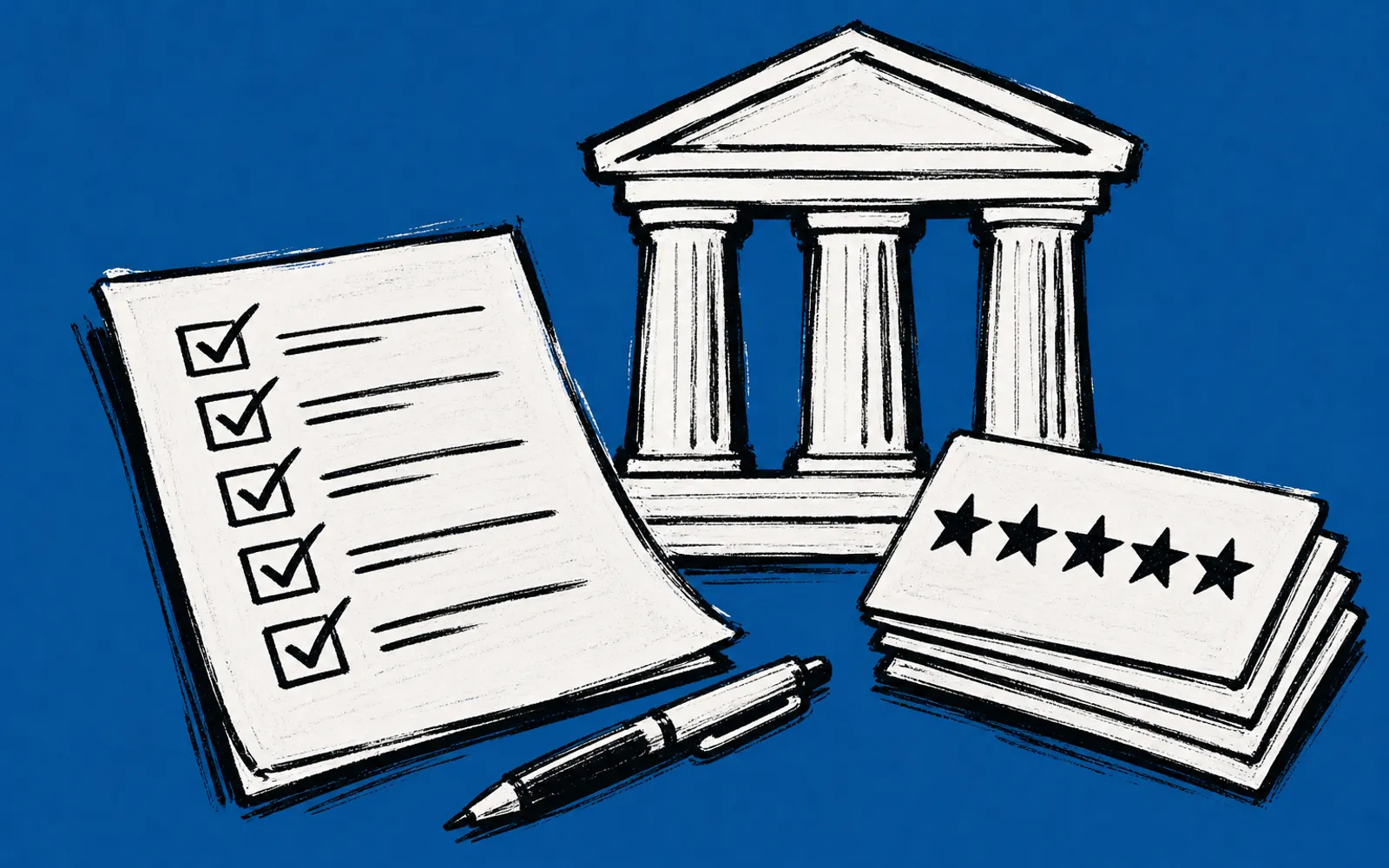

- AI answers for professional services lean on published expertise, client reviews, credentials and case results
- An AI that settles on two or three names for a client need keeps recommending them
- You can audit your visibility by asking the same buyer questions on five engines and reading who gets named
- The work starts with your own website, reviews and listings and costs nothing to begin
A prospect types who is the best estate attorney near me into ChatGPT, and never opens Google. Depending on what the assistant finds, your firm is either in that answer or invisible to the person asking. The fix is not advertising. It is shaping your website, reviews and listings so the AI has accurate material to draw on when it recommends a firm like yours.
The scale is hard to overstate. ChatGPT alone has crossed 1 billion monthly active users, according to OpenAI figures reported in June 2026, and processes 2.5 billion prompts per day. Some of those prompts are your future clients asking for a referral before they ask anyone else.
How AI assistants pick a firm
When someone asks an AI assistant for a professional services recommendation, the answer leans heavily on a few signals: published expertise, client reviews, bar and board credentials, and case results. That is what the AI reads and repeats. Unlike a ranked list of links, the assistant synthesizes a short answer, often two or three names, and frames each one with what it found.
There is a compounding effect worth understanding. Once an AI settles on two or three names for a specific client need, it keeps recommending them. The firms that get named keep getting named, because the signals that earned the first mention keep confirming it. The firms that never get named stay invisible, even when they are equally qualified.
A visibility check works by putting the same buyer questions to five engines, ChatGPT, Claude, Gemini, Perplexity and Google AI Overviews, and reading every answer for the companies it names. What comes back is a map of who the engines recommend in your category, how often each is named, and where you sit among them. You can run a rough version of this yourself without any tool.
Who this work fits
This matters most for owner-led firms in a defined practice area and market: an estate planning attorney in Sacramento, a CPA firm serving restaurants in Orange County, a family law practice in the Bay Area. AI answers get specific. A firm with a clear practice area and a clear local footprint is easier for an assistant to name than a generalist with vague positioning.
It matters less if your work comes entirely from referrals you never want to widen, or if you are at capacity and do not want new inquiries. The checklist below still takes an hour and is still worth running once, because you will learn what AI says about your firm either way.
Run the audit yourself
This is a desk exercise. You need a browser, a free ChatGPT account, and about an hour. A paid subscription such as ChatGPT Plus gives longer memory and more research capability, but the free tier is enough to see what the answers look like.
- 01Write ten buyer questions
Write the exact questions a client would ask, such as who is the best estate attorney in Sacramento, in your prospects' words.
- 02Ask them on five engines
Put each question to ChatGPT, Claude, Gemini, Perplexity and Google AI Overviews and record every firm named.
- 03Count the mentions
Track how often your firm, your named competitors, and firms you never listed appear across the answers.
- 04Read the framing
Note what each engine says about the firms it names: practice area, reviews, credentials, published material.
- 05Check your practice pages
Open your website and ask whether a stranger could state your practice area, city and credentials in one sentence from the homepage alone.
- 06Check your reviews
Read your Google, Yelp and Avvo-style listings and ask whether recent reviews mention the work you want to be found for.
- 07Check your credentials
Confirm bar or board credentials, case results and published articles appear on pages an assistant can actually read.
- 08Fix the weakest signal first
Pick the one gap that came up most in step 4 and publish or correct it, then rerun the questions in two weeks.
What actually moves the answer
Three signal groups do most of the work. First, published expertise: articles, guides and pages that state what you do, for whom, and where, in plain text an assistant can read. Second, client reviews: recent, specific reviews that name the practice area and the outcome. Third, credentials: bar and board listings, case results, and any third-party page that states who you are. A firm with all three, stated clearly, gives an assistant something accurate to say.
What does not help is vagueness. A homepage that says experienced counsel for all your needs gives an assistant nothing to repeat. Neither do image-only bios, credential pages behind a login, or reviews that all say great service with no mention of the work. The engines quote what they can read, so write for the reader and the assistant at once.
Be honest about two limits. Nobody can guarantee you a place in an AI answer, and results take time. Signals have to be published, picked up, and reflected across engines, which happens over weeks and months, not days. Treat this as steady publishing and listing hygiene rather than a one-time trick.
Where we come in
At Cali AI Lab we help owner-led California businesses with exactly this kind of work. An AI Concierge learns your firm, works alongside you on real tasks through two 1-hour calls a month, and answers questions by voice message and email between calls. During a fit call we can look at what the engines say about your firm today and pick a first fix worth doing. Everything starts with a free 25-minute fit call on Zoom, and there is no public price: the fit call comes first.